
Design History Society Conference Wrap up
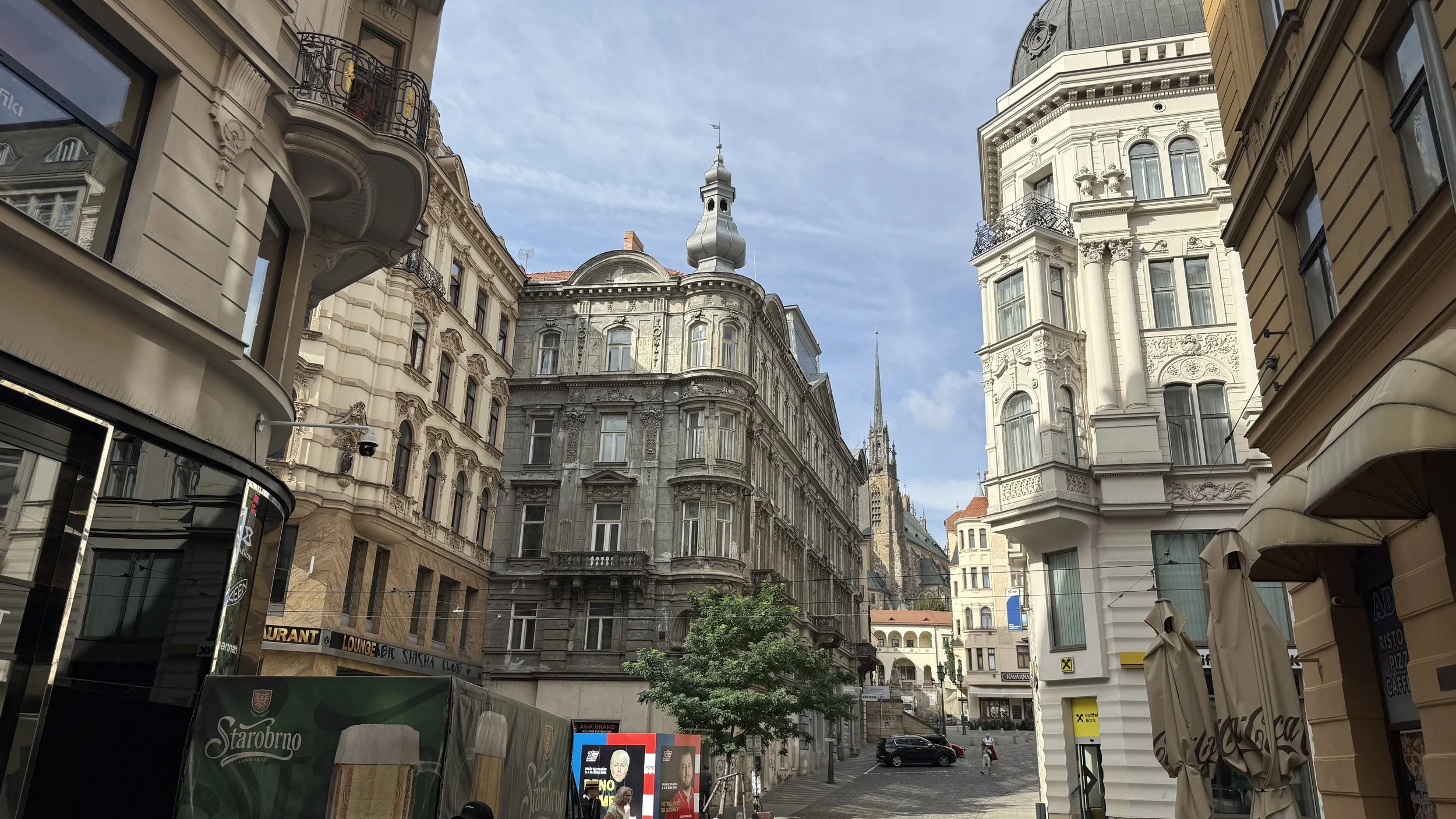
The Design History Society held its annual conference in Brno, Czech Republic with the theme Design in a Age of Uncertainty, and I was lucky to attend thanks to a PNCA grant. With titles like, “The Design Culture of South Korea’s Impeachment Rallies: From Candlelight Protests to Light Stick Protests” and “Speculative Fulgurology: Imagining Design with Earth Energies in the Age of Climatic Uncertainty” talks ranged from the politically bold to broadly speculative and (sometimes) utterly mundane, but that was part of the conference’s charm! The organization holds an all-encompassing view of design to include architecture, craft, industrial, interior, and even design education.
This style of academic conference can be very insular: academics presenting to each other with the end goal of earning a PHD or academic publishing. That said, these presentations help me to understand contemporary design discourse, reflect upon my own design practice and teaching practices. Work presented is often research in process in search of feedback and discussion. This conference helped shaped my understanding of how to present my own work and research in the future in terms of a broader academic reach, but it also introduced new figures, new ideas and stories to tell within design history.
Below are some top-level takeaways from presenters.
Postmodern Design in Socialist East Germany
Kultur im Heim 1982
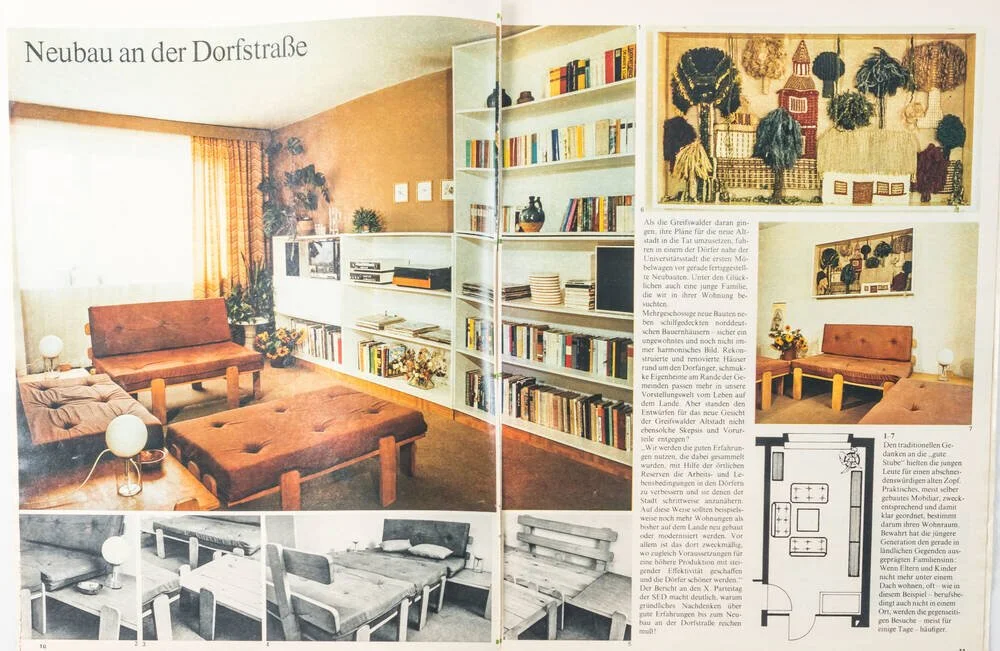
I’ll kick off the journey in East Germany with the paper, “How Postmodern Design was Navigated in the Last Decade of Socialist East Germany”. In it, Jessica Jenkins discussed how postmodernist ideas and aesthetics crossed into the GDR where it was accepted as only as a form of “extended functionalism”.
Shunned as a Western phenomenon, postmodernism was contentious in socialist Germany in the 1980s. But through a popular home design magazine, Kultur im Heim (Culture in the Home), postmodern aesthetics started to quietly appear in interior design and industrial design objects. Within the socialist constraint, modular furniture was a way to stay true to East German values while allowing for personal expression in the guise of customization. These works may have lacked the playfulness, irony or full color expression of the Western counterpart, but they were a bridge to Western design trends. Browse archived issues of Kultur im Heim.
Norway’s Art Nouveau Textile Artist Frida Hansen
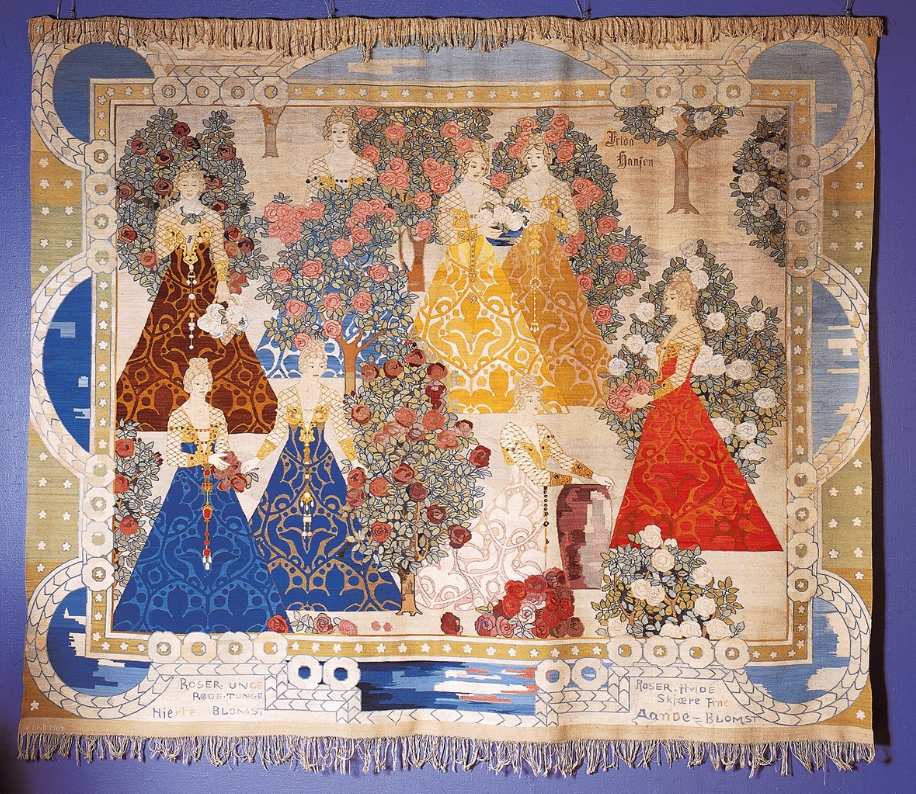
Frida Hansen’s In the Rose Garden, 1904. Photo by Bjørn Johnson
In the presentation, “Weaving a Vegetal Modernity: The Garden and its Significance for Frida Hansen’s Innovative Textile Design”, Adine Lexow takes us into the private world of Norway’s most prominent Art Nouveau artist Frida Hansen. Growing up in a wealthy family in the late 1800s, Frida felt most at home in the estate’s garden which included all manner of flowers, herbs and vegetables. When her family lost its home to bankruptcy, Frida brought her garden back to life through intricate weavings with botanical themes. As an artist, Frida not only conceived and wove the work, she sourced and spun local wool and let the texture and weight of the wool contribute to and guide her designs. Frida looked again to nature for color, mixing her own dyes from recipes gleaned from farmer’s wives. By carefully selecting and spinning the wool, crafting the natural dyes and reflecting floral motifs, Frida’s work defies the trends of the industrial age and helped bring about a weaving renaissance. Learn more in this essay, “Frida Hansen’s Rose Garden: A Tribute to Feminine Crafts”
Design as a Way to Inhabit Chaos
Keynote speaker Lukáš Likavčan filled us all with expansive ideas. He theorized that uncertainty was an output of chaos, which is inherent in the natural world, and that design at its core was a way to inhabit chaos. In a talk so grand, that it considered outer space, he encouraged us to consider design as a way to impose meaningful order. Case studies showcased the technological frontier, imagining robots that move beyond mimicking human behaviors and actions. This talk was far-reaching and had us wondering, if we were to redesign the human hand, how would we improve upon it, and would we want gigantic robotic hands emerging from our bedroom ceilings, and finally, should I have considered a career as a space lawyer? The talk really was out of this world.
Beh Shahn’s American Social Realism
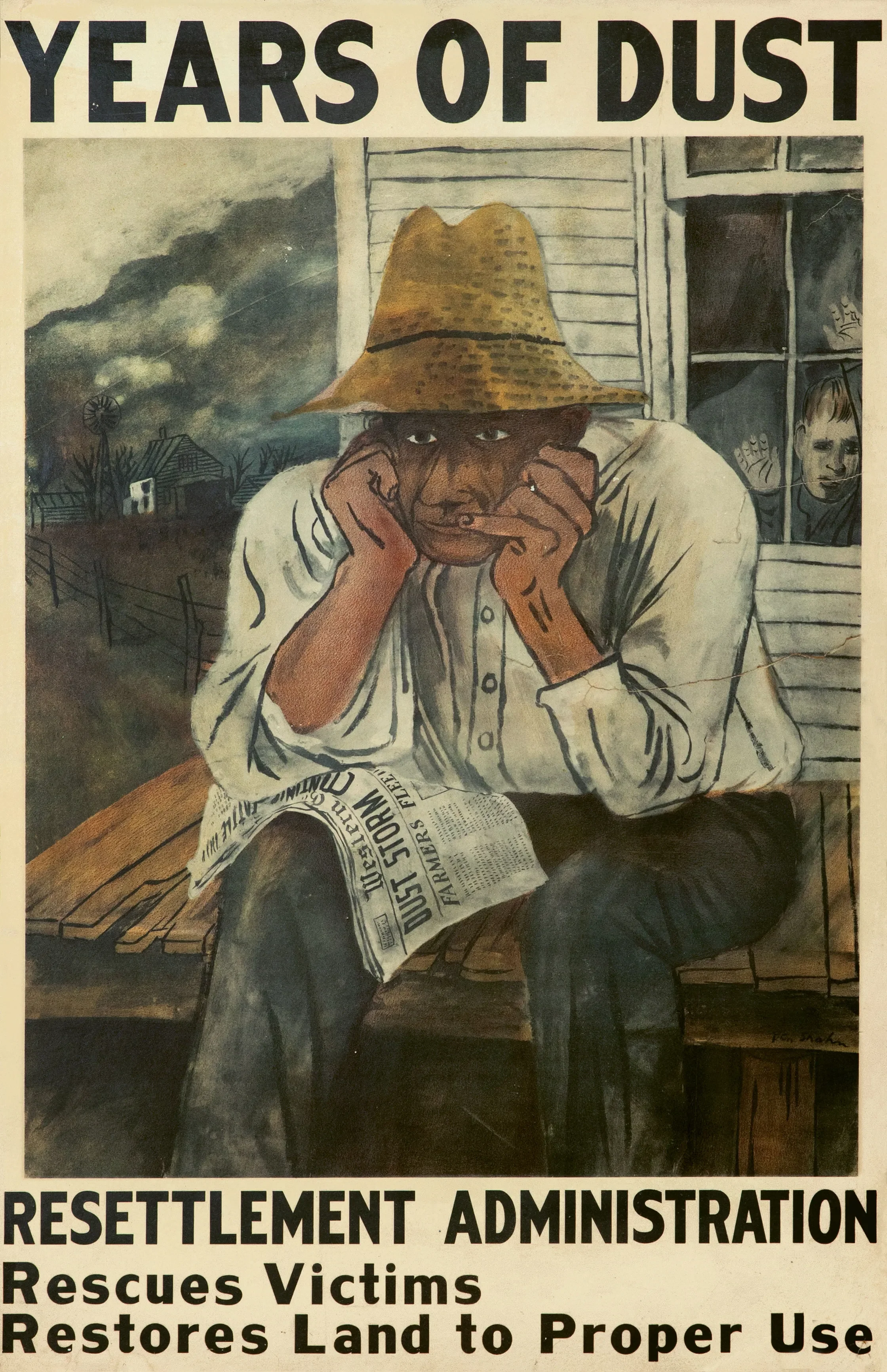
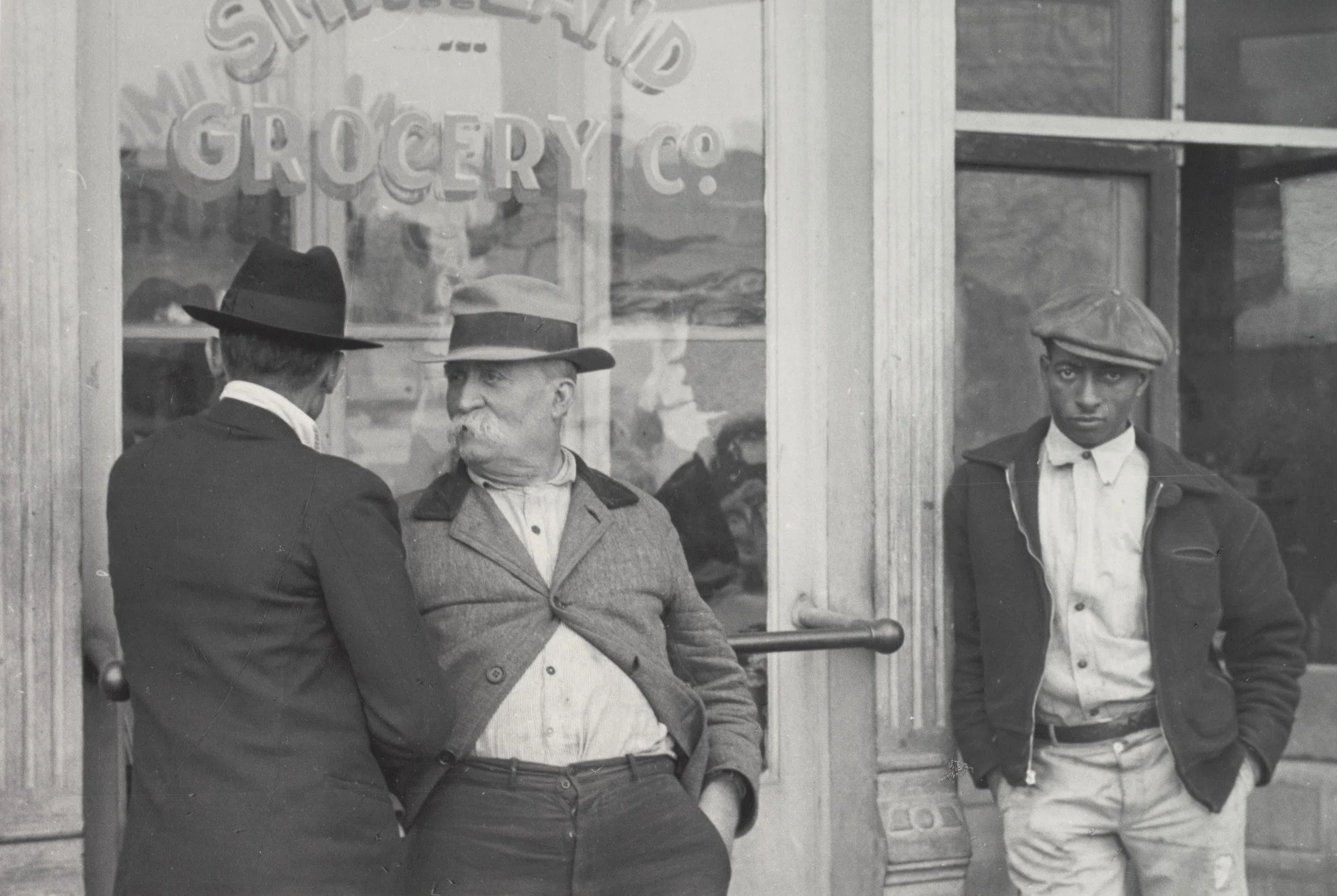

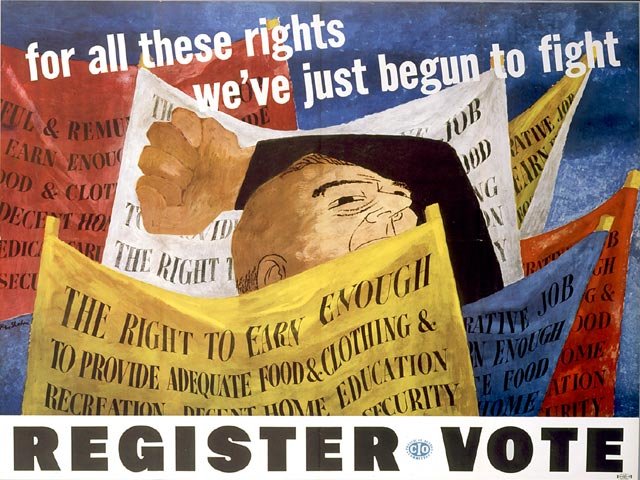
Presenter Anne Cohen Kirah was more grounded as she gave a riveting defense of her thesis that “design’s most enduring answer to uncertainty is civic imagination.” As evidence, she presents the work of Beh Shahn, a Lithuania-American artist and designer, one of the principal figures of American Social Realism. Kirah claims Shahn’s civic practice was honed thanks to the New Deal in the 1930s.
Shahn started his journey as an immigrant sign painter and lithographer in New York City. On assignment in the Dust Bowl ravaged American South, Shahn captured the realities of Great Depression with photos that highlighted the human toll within the ravaged landscapes. Shahn later turned to commercial art, canvas painting, and murals but always with a social documentary approach.
Kirah argues that work rooted in compassion and accessibility is the “ethical foundation of design communication”. She draws a line between nonconformity and social harmony saying “the amount of nonconformity a society tolerates is a measure of its health.” She holds up Shahn the ideal artist, someone who harnesses propaganda to advocate for social reform.
Ben Shahn’s career is wide-reaching spanning anti-war, voter registration and civil rights themes. He is quoted as saying, “I paint two things: what I love and what I abhor.” Learn more about Ben Shahn.
Maps and Myths
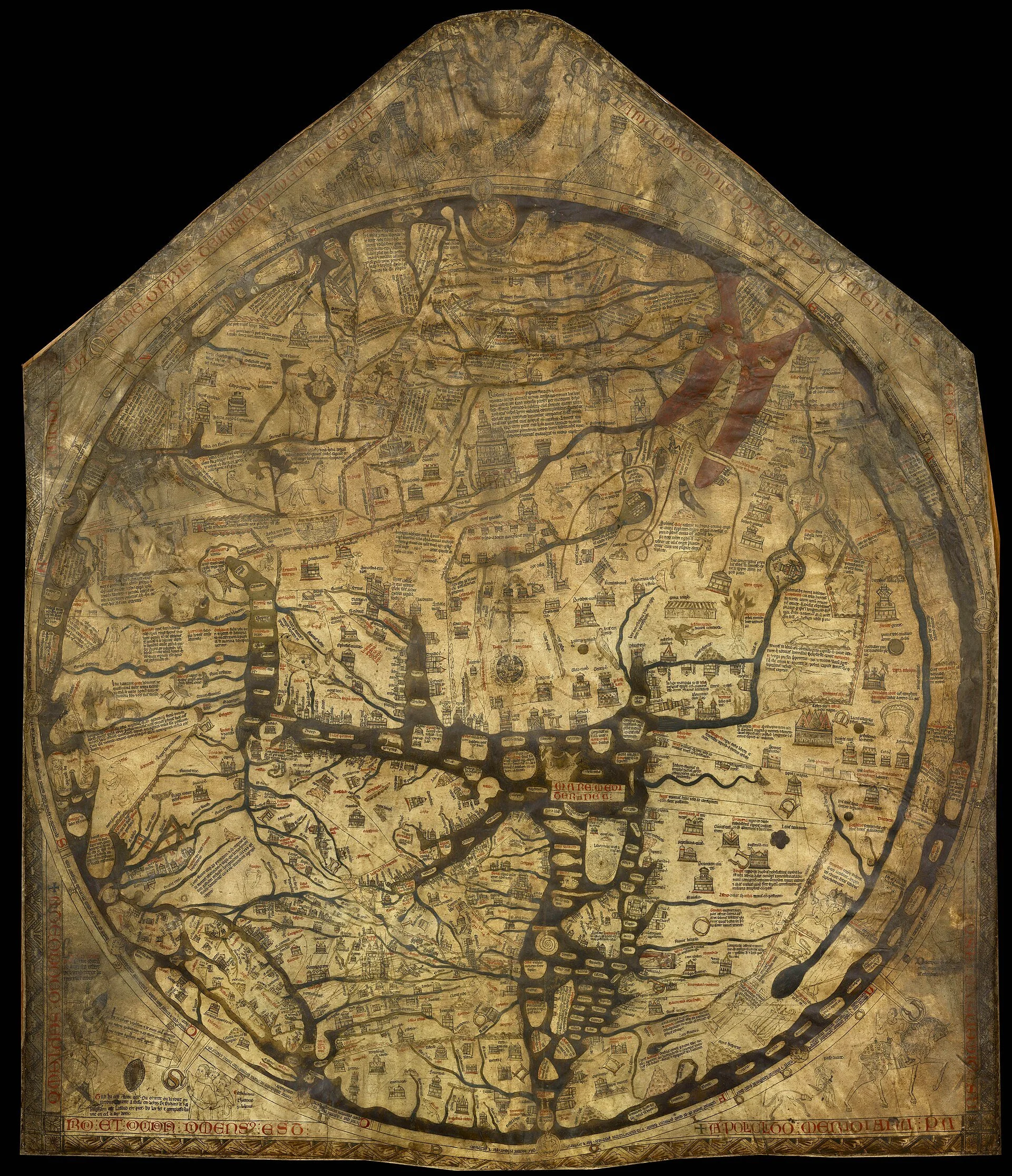
Hereford Mappa Mundi displayed at the Hereford Cathedral England, 1300s
In “Cartographies of Uncertainty: Google Maps and the Politics of Truth” Ory Bartal argues all mapmaking is political and has been since the earliest depictions of environmental wayfinding. Bartal takes us back to 1300 with “Mappa Mundi”, a medieval map of the world. This curious illustration represents not just the physical geography (showing us Paris, Jerusalem and Hereford in the UK where the map was created), but a biblical one (displaying Noah’s Ark, Eden and the Tower of Babel). Weaving in mythical creatures and classical mythology, this map is clearly a storytelling device.
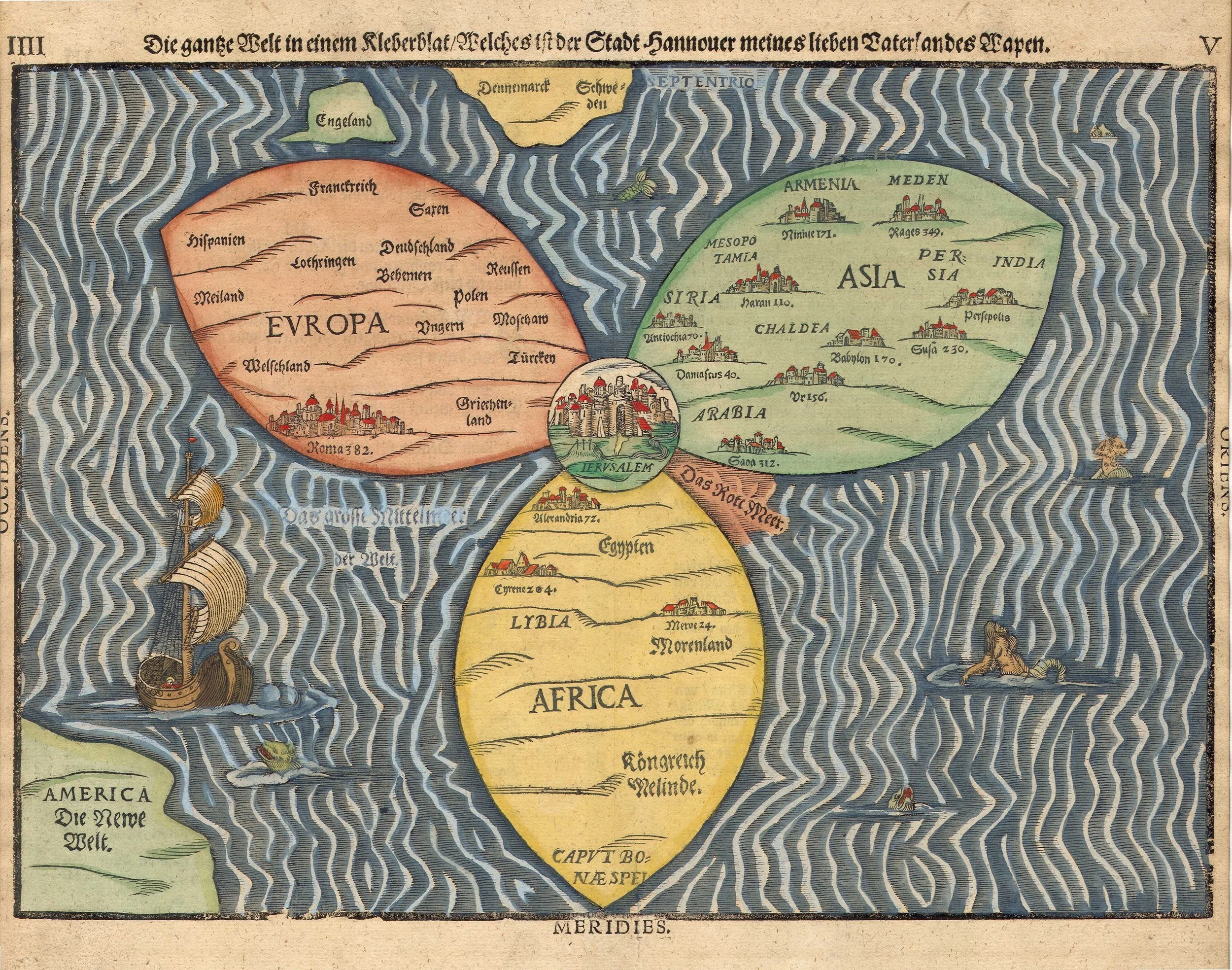
Bünting cloverleaf map, 1581
The same is true for the Bünting cloverleaf map or “World in a Cloverleaf” of 1581. This is a map that centers Jerusalem with three continents, Europe, Africa, and Asia emerging as “leaves”. These earlies maps were ideological, reflecting a spiritual worldview through symbolic cartography.
Bartal draws parallels to contemporary map-making. One only has to watch the news to understand that country borders and names for landmasses and bodies of water are the cause of debate, the butt of jokes or the foundation for wars. Bartal analyzed how Google Maps leans into uncertainty as a solution, showing boundaries of the Kashmir region as part of India for Indian users and part of Pakistan for Pakistani users.
Bartal gives a nod to artists today who are reimagining how we think of maps. In a technologically advanced era, these artists propose maps can return to their storytelling roots. For example, designers and researchers at GoodCityLife.org propose mapping experiences that are more sensory and psychological. Their “Smelly Map” illustrates the “urban smellscape” from data gathered on social media. From car emissions to food smells these maps visual the complexity of urban landscapes, imagining our noses as “big data machines”.
Trust Audiences with Complexity
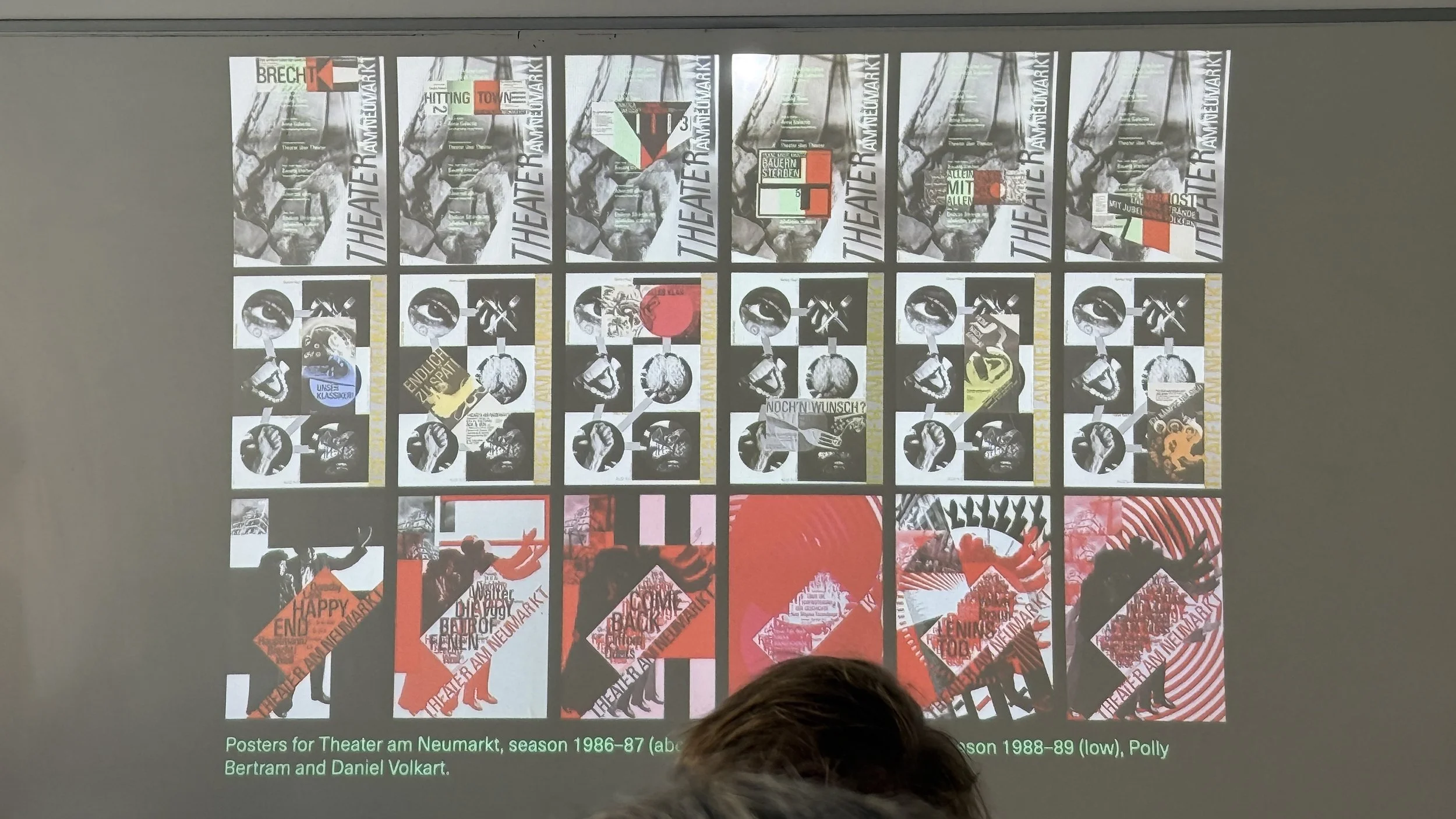
Poster designs for the Theater Neumarkt in 1980s Bern, Switzerland
Presenters Miriam Koban and Robert Lzicar, encouraged us to “Trust Audiences with Complexity” in their review of subversive postmodern poster designs for the Theater Neumarkt in 1980s Bern, Switzerland. Rooted in youth culture, the posters reflect social fragmentation of the era. They argued designers should harness uncertainty rather reducing it for an audience.
Nostalgia and Uchronia
Presenter Trond Klevgaard broke down nostalgia trends in Britain post-postmodernism. Kelvgaard defines nostalgia in design as an aesthetic approach that is applied without philosophy. It conjures a non-specific generalized past. While retro design (which can include revivals) intentionally—often ironically—references past movements, drawing philosophical alignment while remixing.
Retro or revival movements can feel fresh, exciting. Shared visual references can serve as a shortcut for meaning. While nostalgia works can feel empty, disconnected and false.
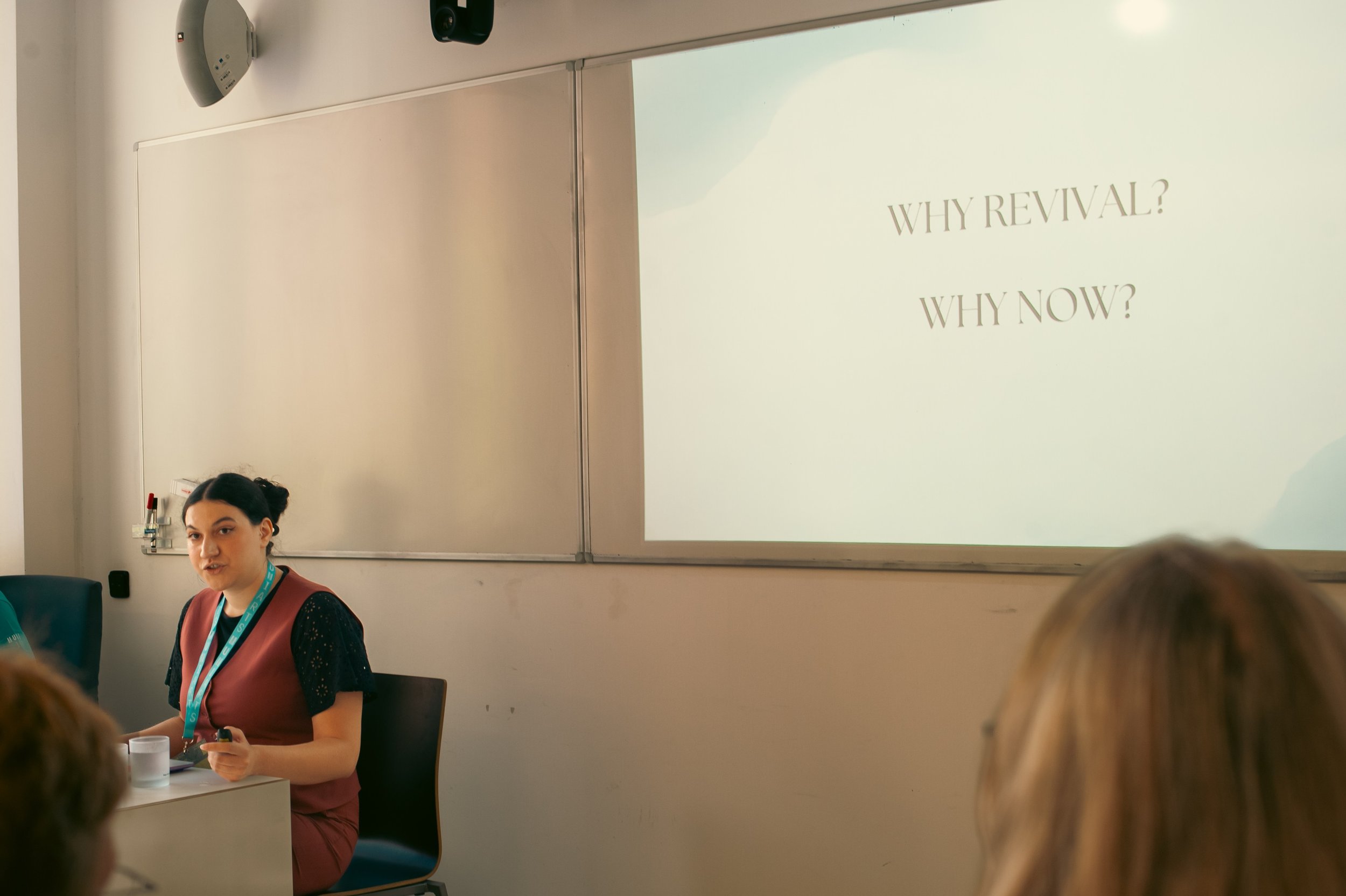
Chiara Mastroianni
Kelvgaard’s talk merges nicely with ideas from the fashion world brought about by Chiara Mastroianni. Mastroianni introduces the idea of uchronia, meaning “no time”, when history merges with mythology to provide a revised, idealized and reinterpreted past. She places the Creative Directors of fashion houses at the center of her story and describes them as taking an archeological approach to design, using their own archives (physical and immaterial) as source material. The directors construct works grounded in “heritage” that is at least partially threaded with fiction.
In her words, the Creative Director, “acts as a mythical speculative interlocutor, enabling imagined conversations in which the past is rewritten to project design trajectories into the future.”
The conference theme “uncertainty” found throughlines for me in meditations on nostalgia, how it has been used to evoke a fantasy of past comfort or as a cultural signifier.
The past is source of deep inspiration for how designers can stand up in the face of right wing movements, “a reservoir of actionable futures”. But as the lecturers point out, the past can be distorted, warped, romanticized, and reconstructed. Through visual nostalgia, a new narrative can be devised whether in service of a fashion brand or fascist movement. The case studies show that in uncertain times the power of nostalgia becomes harder to deny.
Woven Narratives and Romani Design
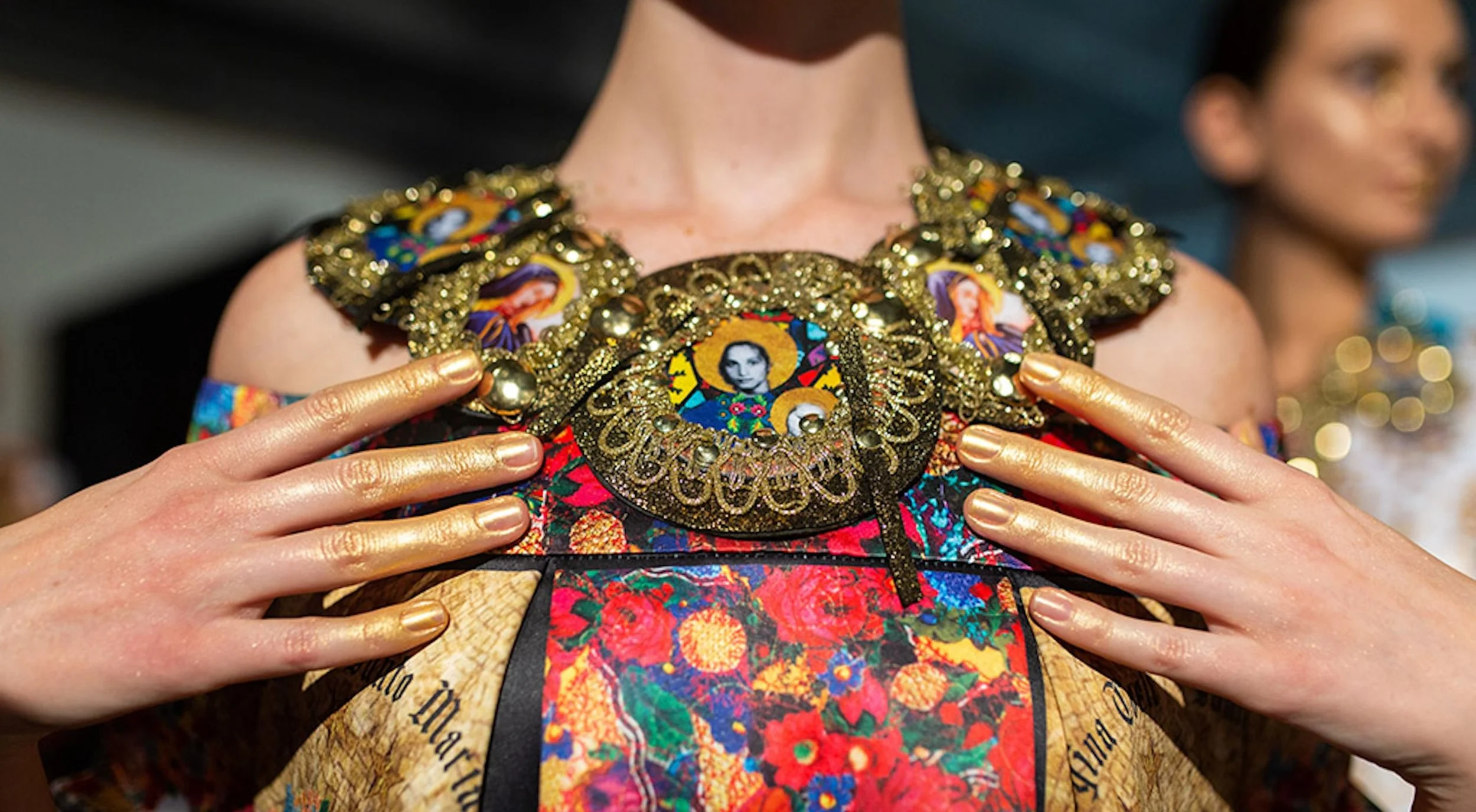
Romani Design collection
The keynote featuring Romani designers Erika and Helena Varga together with Lili Kriston give us a guide for how to weave a new narrative from a painful past. The Varga family—through their studio Romani Design—integrate personal histories and the history of the Romani people through textile design which contains family photos, vibrant floral patterns and other collages. The fabric is remixed in a variety of traditional and contemporary fashions and celebrated with fashion shows and exhibitions. Rather than treating Romani design heritage as a static collection of objects, the talk proposes their work is “a Romani museum ecosystem: a living, participatory network in which design, memory, community, education and contemporary cultural production intersect.” Through design, Romani culture is defiantly reclaimed.
Thanks to PNCA and to my conference friends from around the world whom I shared ideas (and drinks!) with.